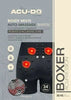

Transportation professionals spend an average of 8 to 12 hours sitting behind the wheel every day. Truck drivers, delivery drivers, VTC and taxi drivers, ambulance drivers, and bus drivers all place significant daily strain on their backs and legs. Prolonged sitting compresses the lumbar intervertebral discs. Constant vehicle vibrations amplify muscle tension. Lack of movement slows blood circulation and causes fluid stagnation in the legs. Over time, this leads to lower-back pain, neck tension, a feeling of heavy legs, swollen ankles, and persistent muscle fatigue that affect quality of life and work performance. ACU-DO Shiatsu self-massage naturally relieves this tension within 30 to 60 minutes after trips, enabling recovery significant.
The alarming figures: why drivers are at the forefront of chronic pain
According to a study by the National Institute of Health, 73% of professional drivers suffer from chronic lower-back pain. 65% report heavy legs and muscle fatigue after trips. 40% develop neck pain. These figures are well above the national average (20% of the general population). Without intervention, this pain becomes disabling can reducre the career expectancy of professional drivers. That is why prevention and recovery are significant in this profession.
Why do transportation professionals suffer from back and leg pain?
The 4 biomechanical mechanisms of pain in drivers
-
Prolonged sitting: sitting for 8–12 hours a day compresses the lumbar discs and fatigues the paravertebral muscles. The L4–L5 and L5–S1 discs undergo constant asymmetrical compression, creating microtraumas (points V23 to V29 of the Bladder meridian)
-
Complete lack of movement: unlike standing occupations, drivers experience slower circulation, fluid stagnation in the legs, and progressive atrophy of the stabilizing muscles (points VB30 to GB34 of the Gallbladder meridian, R3/R7 of the Kidney meridian, F5 of the Liver meridian)
-
Vehicle vibrations: trucks, buses, and cars transmit vibrations (1–3 Hz) that amplify lower-back tension and create imperceptible but destructive cumulative fatigue in the long term
-
Lack of structured breaks: few interruptions during the day prevent natural recovery and allow microtraumas to accumulate. After 5–7 years without prevention, the pain becomes most of the time disabling
Areas of the body affected in professional drivers
The lower back: lower back pain in truck drivers (73% of cases)
Prolonged sitting requires a slight forward flexion of the trunk for 8–12 consecutive hours. The lumbar discs are subjected to constant asymmetrical compression, particularly at the L4–L5 and L5–S1 levels. The paravertebral muscles (erector spinae) remain in semi-permanent contraction to stabilize the spine. This chronic muscular fatigue creates trigger points that radiate pain throughout the back and sometimes into the buttocks. The points V23 at V29 of the Bladder meridian release this critical lower-back tension and restore mobility.
The legs: venous stagnation and heavy-leg sensation (65% of cases)
Remaining seated slows venous return and lymphatic circulation by 30 to 50%. Blood travels less easily back up toward the upper body, creating a feeling of heavy, congested, progressively tired legs. Fluids stagnate in the interstitial spaces, causing mild edema (ankle swelling). After years, this can develop into varicose veins or venous insufficiency pronounced. The points VB30 at GB34, R3/R7 and F3 at F5 activate natural venous circulation and lymphatic drainage, immediately relieving the feeling of stagnation.
The calves and ankles: congestion, tension, and swelling
The calves accumulate stagnant fluids during long journeys and become hard, tender, and painful. The ankles gradually swell over the course of the driving day, making blood circulation difficult. The point V59 promotes the natural drainage of the legs. Used regularly, it prevents chronic pain from developing and restores lightness to the legs even after very long journeys.
The neck and shoulders: cervical tension from driver’s “tech neck”
Intense concentration on the road forces the neck and shoulders to remain contracted for hours. Keeping your gaze fixed on the road creates isometric tension in the trapezius and cervical muscles. After months, this develops into cervicogenic headaches (headaches originating from the neck). Although less visible than lower back pain, this is a major source of discomfort. Complete recovery must include the shoulders and neck.
Table: A few points useful in TCM for each area of driver pain
1 cun = 1 thumb width
|
TCM point |
Meridian |
Location |
Benefits for drivers |
|
V23 at V29 |
Bladder |
Lumbar L2 at S3, 1.5 cun on either side |
MAJOR point for lower back pain: releases lower-back tension after prolonged driving, restores lumbar mobility — PRIORITY |
|
V40 (Weizhong) |
Bladder |
Popliteal fossa, center of the knee crease |
Relaxes the lower back and legs, building bodily resilience after constant vehicle vibrations |
|
VB 31/34 (Fengshi) + (Yanglingquan) |
Gallbladder |
7 cun from the crease of the knee in the proximal direction along the lateral thigh, at the tip of the middle finger + Outer leg, 1 cun below the head of the fibula |
Essential for leg circulation: relieves venous heaviness, relieves hip and lower-limb pain, relieves lower-back pain, reduces the feeling of stagnation after hours of driving |
|
R7 (fuliu) |
Kidney |
2 cun above the Inner ankle, hollow between the malleolus and tendon |
Boosts renal and energetic circulation: overall resilience after fatigue accumulates day after day, harmonizes fluid production, strengthens the tendons |
|
F5 (Taichong) |
Liver |
5 cun above the inner malleolus on the tibia |
Stimulates Stimulates circulation, relieves pain, reduces edema, nourishes the blood |
|
V57 + V59 (Chengshan) + (Fuyang) |
Bladder |
(V57) Calf, midpoint of the crease between the ischium and heel + (V59) 3 cun level with the tip of the outer malleolus on the posterior edge |
Relieves extreme calf tension after a full day of sitting and promotes drainage of the lower legs |
|
RP6 (Sanyinjiao) |
Spleen Pancreas |
Inner ankle, 3 cun above the malleolus |
Convergence point for overall circulation: reduces ankle swelling and leg edema |
TCM source: TCM Benefits of the ACU-DO Back Boxer | Points & Meridians – VSAH and TCM Benefits of the ACU-DO Ankle Bracelet | Points & Meridians – VSAH
Complete ACU-DO protocol for transport professionals:
Before driving: body preparation (15/30 min in the morning)
-
ACU-DO Back Boxer: 15 minutes minimum in the morning before starting
-
TCM focus: V23 at V29 (prepares the lower back for 8–12 hours of sitting)
-
Result: The lower back is activated and prepared, reducing the risk of stiffness during the day
During journeys: take a break every 2–3 hours (15/30 min) OR while driving
-
ACU-DO Leg Ankle Support: 15 minutes minimum during a break to stimulate circulation
-
TCM focus: RP6, F5, R7, V59 (stimulates circulation, prevents stagnation)
-
Result: Stagnation is interrupted, and the legs feel lighter
After a full day of driving: maximum recovery (30-60 min minimum)
-
ACU-DO Back Boxer: 30-60 minutes (relaxes the lower back and hips)
-
At the same time, ACU-DO Leg Ankle Support: 30-60 minutes (complete drainage and circulation)
-
Optimal package: Complete Back + Legs package for simultaneous recovery of the 2 critical areas
ACU-DO Back Boxer Sleeve | Relieve lower back pain for transport drivers:
Back pain & sciatica – ACU-DO Shiatsu Massage – VSAH
ACU-DO Leg Ankle Support | Relieve heavy legs and tired ankles |
Swollen ankles & water retention – Shiatsu Massage – VSAH
Prevention routine: to prevent pain from setting in
-
Daily routine: 15/30 min morning (Back Boxer preparation) + 15/30 min lunch break (Calf Sleeve circulation boost) + 30/60 min evening (Complete Pack recovery) = 60/120 minutes/day
-
Result after 3–4 weeks: 50–70% reduction in lower back pain and heavy legs
Real-world use cases: drivers who use ACU-DO
Case 1: Long-haul truck driver (12 hours/day, 5 days/week)
Before ACU-DO: intense lower back pain every evening, constantly heavy legs, difficulty walking after work. After 4 weeks of daily use (15/30 min morning + 30/60 min evening): lower back pain reduced by 60%, lighter legs in the evening, improved mobility. After 12 weeks: can work with less pains, considerably improved quality of life.
Case 2: Urban delivery driver (8–10 hours/day, short trips)
Before ACU-DO: progressively worsening lower back pain and heavy legs despite shorter trips. After 3 weeks (15/30 min lunch break + 30/60 min evening): pain stabilizes, with no worsening. After 8 weeks: pain decreasing, can make several trips with less fatigue.
Case 3: Ambulance driver (12 hours, driving + physical stress)
Before ACU-DO: lower back pain + heavy legs + neck tension. After daily use (Complete Pack 30/60 min evening): overall improvement of 55% in 3 weeks; can focus on patients without being distracted by physical pain.
Why this recovery works: the science of Shiatsu for drivers
Shiatsu self-massage stimulates the energy meridians (gallbladder, kidney, liver) that control venous and lymphatic circulation. By stimulating the Bladder, Gallbladder, and Kidney meridians and of the Liver daily, circulation that had stagnated during 8–12 hours of sitting is restarted. It is like pressing a physiological “reset button”: afterward 30-60 minutes, the circulatory system regains its balance and stagnant fluids begin to drain naturally.
For the back, the points V23 at V29 work on the kidneys' vital energy (in TCM, the kidneys govern the spine and the body's resilience). Regular stimulation strengthens lumbar resilience and prevents pain from setting in.
To go further:
-
Healthcare professionals: relieve tired legs from standing – VSAH
-
Repetitive movements: prevent MSDs and tendinitis – ACU-DO – VSAH
-
Self-massage between sessions: Extend the effects of treatments – VSAH
FAQ | 6 transport industry questions
Why do drivers suffer so much more from back pain compared with people in other occupations?
Prolonged sitting compresses the lumbar discs for 8–12 hours a day. Vehicle vibrations imperceptibly increase muscle tension. A lack of breaks prevents recovery. After 5–7 years without prevention, 73% of drivers develop chronic pain. That is 3 to 4 times more than in the general population.
Why do legs become so heavy while driving?
Sitting slows blood and lymphatic circulation by 30–50%. Lack of movement causes fluid to stagnate in the legs and ankles. Over time, this leads to swelling, persistent heaviness, muscle fatigue, and sometimes varicose veins. After several years, it becomes a major source of discomfort and overall fatigue.
Can ACU-DO be used daily after 10–12 hours of driving?
Yes, absolutely. Regular use (30–60 min/day after work) reduces fatigue and prevents tension from building up. Drivers who use ACU-DO every evening see their pain decrease by 50–70% within 3–4 weeks. Daily use is recommended for this high-risk population. Acu-do can also be worn while driving.
Which Shiatsu self-massage product should I choose: Back Boxer, Leg Ankle Support, or both?
Back priority (80% of cases): ACU-DO Back Boxer + short breaks with the Ankle Support. Leg priority (20% of cases): ACU-DO Ankle Support + Back Boxer in the evening. Optimal option (70% see maximum improvement): Complete Back + Legs Pack for simultaneous recovery of ALL the driver's critical areas.
Can pain disappear with ACU-DO Shiatsu self-massage?
Yes, in some casesin 60–70% of mild to moderate cases (less than 3 years of chronic pain). Pain lasting more than 5–10 years requires a combined approach: ACU-DO + physiotherapy + ergonomic seat adjustments. ACU-DO is highly effective for PREVENTION (before pain sets in) and early TREATMENT (the first 1–2 years).
Are there any risks or contraindications to using ACU-DO while driving?
No. ACU-DO is non-invasive, entirely natural, contains no medication, and has no side effects. There are no interactions with medications and no general medical contraindications. Consult a doctor if you have a diagnosed herniated disc. or pronounced pain.
If you experience pain or irritation, remove Acu-do and seek medical advice before using it again.
Acu-do is a complementary wellness product and must never replace medical advice
Keywords
Information
-
, even Author Article title
-
, even Author Article title